


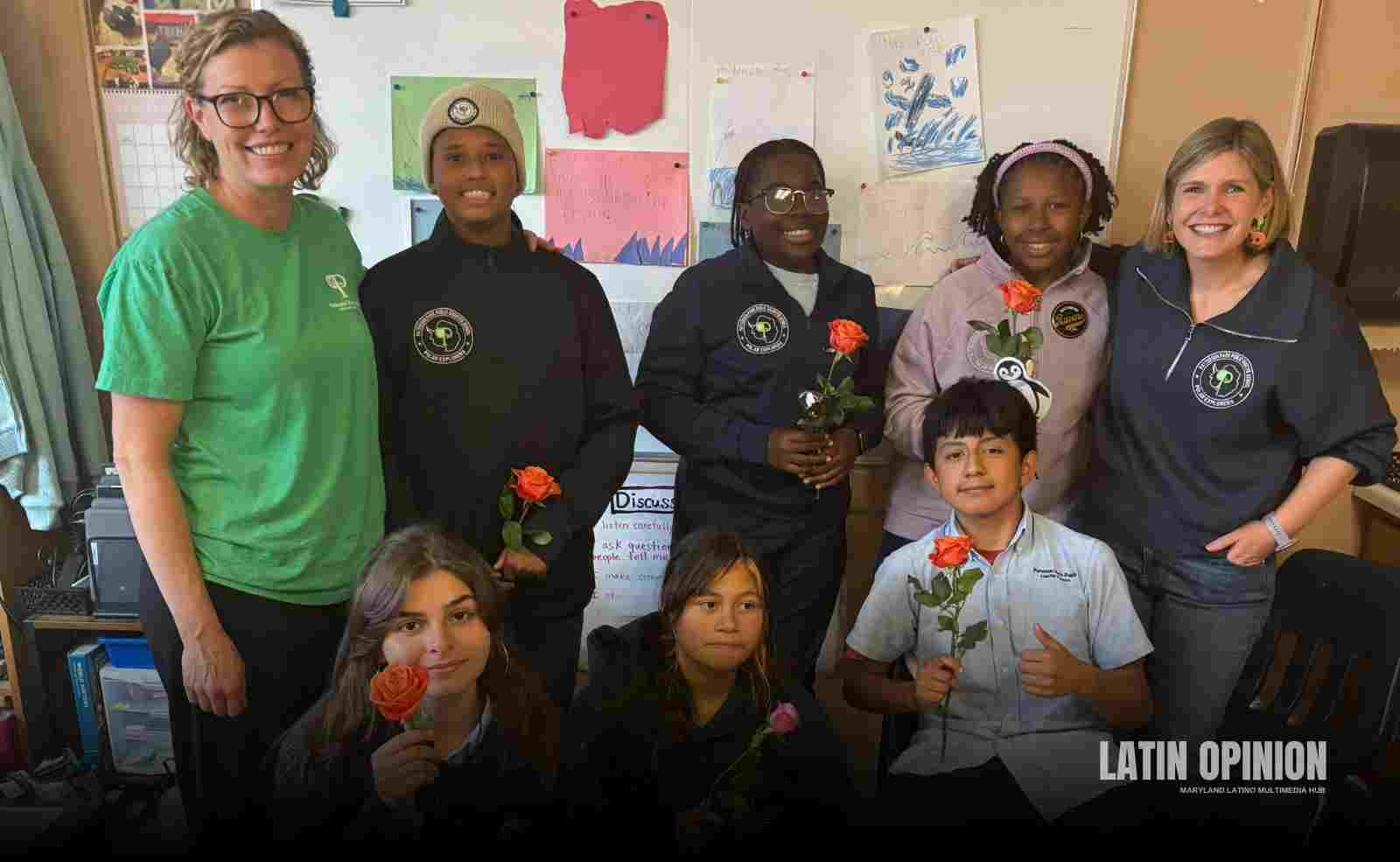
Estudiantes de Patterson Park Public Charter School se preparan para una experiencia que conecta el aprendizaje científico con el cuidado del planeta. A sus 13 años, quieren descubrir, compartir conocimientos y demostrar a otros niños de Baltimore que también pueden alcanzar grandes metas.
Por Latin Opinion 360
Antes de conocer los paisajes helados de la Antártida, estos jóvenes de Baltimore ya tienen algo importante para compartir: sus razones para emprender el viaje. Hablan de ciencia, de cambio climático, de animales y de lugares que hasta hace poco parecían lejanos. También hablan de sus familias, de los docentes que confiaron en ellos y de la posibilidad de inspirar a otros niños.
Son estudiantes de Patterson Park Public Charter School e integrantes de Polar Explorers, un programa educativo que convierte la curiosidad en una oportunidad para explorar y comprender el mundo. La expedición tiene prevista su salida el 15 de noviembre de 2026, con regreso el 28 de noviembre.
Para Latin Opinion 360, sus testimonios permiten contar esta historia desde lo más cercano: lo que significa para un adolescente de nuestra comunidad descubrir que puede participar en una experiencia científica y compartir después lo aprendido.
William, de 13 años, siente que esta oportunidad ya está cambiando su vida. Espera vivir una experiencia enriquecedora, contar su recorrido e inspirar a otras personas. Su entusiasmo expresa una idea que atraviesa los testimonios: el viaje tendrá continuidad cuando puedan narrarlo al regresar.
Joseph Gomez, también de 13 años, tiene un propósito concreto. Quiere traer información que otras personas puedan utilizar para ayudar a disminuir los efectos del cambio climático. Para él, aprender implica encontrar conocimientos útiles y ponerlos al servicio de los demás.
Aiden, de la misma edad, desea transmitir un mensaje de confianza: “Quiero que todos sepan que incluso las personas más pequeñas pueden hacer el cambio más grande”. Sus palabras reflejan la importancia que atribuye a la participación de los jóvenes en los desafíos de sus comunidades.
Frida, de 13 años, quiere difundir información valiosa y compartir las experiencias de un lugar al que pocas personas tienen la oportunidad de llegar. Agradece profundamente la posibilidad de viajar y celebra algo que vuelve la aventura especialmente significativa: vivirla junto a sus amigos y profesores.
Isabelle, también de 13 años, siente curiosidad por los animales y por el ambiente antártico. Quiere comprender mejor la relación entre el calentamiento de la región y el cambio climático, una inquietud que podrá transformar en preguntas, observaciones y nuevos aprendizajes durante la expedición.
Para Daniel, de 13 años, participar tiene además un significado relacionado con su identidad. Expresa su agradecimiento por acceder a una oportunidad poco frecuente y destaca lo que representa hacerlo como hispano. Desde su experiencia, reconoce que muchos jóvenes hispanos no llegan a vivir algo semejante.
Tamryn, también de 13 años, piensa en los niños más pequeños de Baltimore. Quiere compartir con ellos una experiencia que puede parecer imposible y convertirse en un ejemplo cuando deseen intentar algo que sienten fuera de su alcance. Su aspiración es clara: ayudarles a creer que pueden llegar a ser lo que se propongan.
Detrás de estas expectativas hay una escuela que busca conectar la educación con la vida comunitaria. Patterson Park Public Charter School, ubicada en el este de Baltimore e integrante de Bluebird Education Network, promueve una formación que involucra a estudiantes, familias, docentes y vecinos. Su enfoque como escuela comunitaria integra el aprendizaje académico con recursos y alianzas que acompañan el bienestar y el desarrollo de los alumnos.
Polar Explorers lleva esa propuesta a un escenario extraordinario. Según la institución, el programa combina, a lo largo de un año, actividades prácticas de ciencia, tecnología, ingeniería y matemáticas —las disciplinas conocidas como STEM— con estudios sobre el clima y la conservación. Además, destaca las contribuciones de las mujeres y de personas de diversos orígenes étnicos y culturales a la exploración y la investigación polar, promoviendo una visión inclusiva de la ciencia..
La iniciativa tiene sus raíces en la experiencia de la educadora Sabina Sully, quien viajó a la Patagonia en 2024 mediante el programa Grosvenor Teacher Fellowship, una colaboración de National Geographic Society y Lindblad Expeditions. Allí tuvo contacto con especialistas en conservación y trabajó en propuestas educativas sobre los ecosistemas de la región. A su regreso, quiso acercar a sus estudiantes la posibilidad de experimentar directamente esa conexión con la naturaleza; con el apoyo de la escuela, colaboradores y patrocinadores, la idea tomó forma.
La preparación incluyó actividades con el National Aquarium, el Maryland Zoo y otros aliados locales. Durante la expedición se prevén observaciones de colonias de pingüinos, trabajo con imágenes térmicas y un proyecto de realidad virtual en colaboración con Towson University. El recorrido contempla pasos por Buenos Aires y Ushuaia, en Argentina, antes de la etapa antártica.
La escuela informa que el viaje se desarrollará a bordo del National Geographic Explorer, con oportunidades de aprendizaje junto a especialistas de campo. Con apoyo de WesbyOne Media, los estudiantes documentarán su experiencia en un cortometraje cuya presentación está prevista en Party for the Planet, del Maryland Zoo.
La Antártida les ofrecerá un paisaje muy diferente del que conocen en Baltimore. Es el continente que rodea el Polo Sur y está cubierto casi por completo por hielo. Sus glaciares y plataformas heladas forman parte de un ambiente extremo; en sus costas y aguas circundantes habitan pingüinos, focas y ballenas. Aunque parezca sorprendente, se considera un desierto por la escasez de precipitaciones.
Comprender lo que ocurre allí ayuda a estudiar cambios de alcance mundial. La NASA utiliza satélites para observar sus mantos de hielo y analizar su relación con el clima y el nivel del mar. Para los estudiantes, este conocimiento permitirá conectar un territorio distante con preguntas que también importan en sus propias comunidades.
Argentina mantiene una relación histórica y científica con la región. Su presencia permanente e ininterrumpida comenzó el 22 de febrero de 1904, cuando asumió la operación del observatorio meteorológico de las islas Orcadas del Sur. Esa fecha se conmemora como el Día de la Antártida Argentina. Por su ubicación e infraestructura, Ushuaia es una de las principales puertas de entrada marítima al continente.
Además de su presencia científica, Argentina sostiene derechos de soberanía sobre un sector del continente al que denomina Antártida Argentina. Esa posición convive con las de otros países dentro del marco del Tratado Antártico, que no resuelve las diferencias sobre soberanía ni supone el reconocimiento internacional de esas reclamaciones. El acuerdo establece que la Antártida debe utilizarse con fines pacíficos y garantiza la libertad de investigación y la cooperación científica. Para los estudiantes, este contexto también ofrece una oportunidad de aprender cómo distintas naciones colaboran en el estudio de un territorio fundamental para el planeta.
El encuentro con ese mundo puede ampliar las preguntas y aspiraciones de estos adolescentes. Observar, registrar información y conversar con especialistas son oportunidades para dar un sentido concreto a lo aprendido en clase. También pueden ayudarles a imaginar su propio lugar en la ciencia, la comunicación y la protección ambiental.
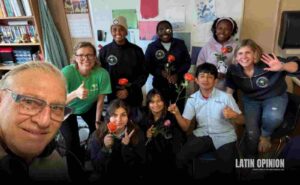
La ilusión por partir está acompañada de un profundo agradecimiento. Los estudiantes reconocen a Miss Sully por confiar en ellos, animarlos cuando sintieron miedo y abrirles las puertas a una experiencia que describen como “el mejor regalo para el Día de Acción de Gracias”. También agradecen a las docentes que hicieron posible el viaje y acompañarán al grupo, entre ellas Ms. Gutting, y a Mr. Wesby por documentar su historia en una película.
Ese reconocimiento se extiende a los compañeros y a todas las personas que los apoyaron durante la preparación. “Todos somos una comunidad y todos nos ayudamos”, expresan al describir el vínculo que han construido. Aunque extrañarán a sus familias durante las fiestas, les entusiasma compartir esta aventura con sus amigos y profesores.
Madres, padres, abuelas, tías y hermanas ocupan un lugar especial en sus agradecimientos: por autorizar el viaje, ayudar con los gastos, acompañar sus temores y recordarles que podían lograrlo si se lo proponían. Entre las expresiones de cariño aparece una dedicatoria a las hermanas —“Son literalmente el orgullo de mi vida”— y la satisfacción de comprobar que aquella confianza dio frutos: “De hecho funcionó. Ya estoy aquí”.
En estas palabras se encuentran la curiosidad científica, el orgullo por la identidad, los deseos de compartir y el reconocimiento a quienes acompañaron el camino. Cuando estos jóvenes regresen a Baltimore, podrán traer conocimientos, imágenes y relatos de la Antártida. También podrán ofrecer a otros niños algo que ellos mismos están descubriendo: la posibilidad de imaginarse en lugares que antes parecían inalcanzables.
From Baltimore to Antarctica: Science, Dreams, and Young Explorers
Students at Patterson Park Public Charter School are preparing for an experience that connects scientific learning with environmental stewardship. At age 13, they hope to make discoveries, share knowledge, and show other children in Baltimore that they, too, can achieve ambitious goals.
By Latin Opinion 360
Before encountering Antarctica’s frozen landscapes, these young Baltimore students already have something important to share: their reasons for making the journey. They talk about science, climate change, wildlife, and places that, until recently, seemed far beyond their reach. They also speak about their families, the teachers who believed in them, and the possibility of inspiring other children.
They are students at Patterson Park Public Charter Schoo and members of Polar Explorers, an educational program that transforms curiosity into an opportunity to explore and understand the world. The expedition is scheduled to depart on November 15, 2026, and return on November 28.
For Latin Opinion 360, their accounts offer a deeply personal perspective on this story: what it means for a teenager in our community to discover that they can take part in a scientific learning experience and later share what they have learned.
William, 13, feels that this opportunity is already changing his life. He looks forward to an enriching experience, sharing his journey, and inspiring others. His enthusiasm conveys an idea echoed throughout the students’ accounts: the journey will continue through the stories they tell after returning home.
Joseph Gomez, also 13, has a specific goal. He wants to bring back information that others can use to help mitigate the effects of climate change. For him, learning means acquiring useful knowledge and putting it to work for others.
Aiden, the same age, wants to convey a message of confidence: “I want everyone to know that even the smallest people can make the biggest difference.” His words reflect the importance he places on young people’s participation in addressing the challenges facing their communities.
Frida, 13, wants to share valuable information and experiences from a place that few people have the opportunity to visit. She is deeply grateful for the chance to travel and celebrates something that makes the adventure especially meaningful: experiencing it alongside her friends and teachers.
Isabelle, also 13, is curious about Antarctica’s wildlife and environment. She wants to better understand the relationship between warming in the region and climate change, an interest she can develop through questions, observations, and new learning during the expedition.
For Daniel, 13, participating also holds significance for his identity. He expresses gratitude for an uncommon opportunity and emphasizes what it means to take part as a Hispanic student. Drawing on his own experience, he recognizes that many young Hispanic people do not have the chance to experience something similar.
Tamryn, also 13, is thinking about younger children in Baltimore. She wants to share an experience that may seem impossible and become a role model for children who want to attempt something they feel is beyond their reach. Her aspiration is clear: to help them believe they can become whatever they set their minds to.
Behind these hopes is a school that seeks to connect education with community life. Patterson Park Public Charter School, located in East Baltimore and part of Bluebird Education Network, promotes an educational approach that engages students, families, teachers, and neighbors. Its community school model integrates academic learning with resources and partnerships that support students’ well-being and development.
Polar Explorers brings this educational approach to an extraordinary setting. According to the school, the yearlong program combines hands-on activities in science, technology, engineering, and mathematics—the disciplines collectively known as STEM—with studies of climate and conservation. It also highlights the contributions of women and people from diverse ethnic and cultural backgrounds to polar exploration and research, fostering an inclusive understanding of science.
The initiative grew out of educator Sabina Sully’s experience traveling to Patagonia in 2024 through the Grosvenor Teacher Fellowship, a collaboration between the National Geographic Society and Lindblad Expeditions. There, she engaged with conservation specialists and worked on educational projects focused on the region’s ecosystems. Upon her return, she wanted to give her students the opportunity to experience that connection with nature firsthand. With support from the school, partners, and sponsors, the idea took shape.
Preparations included activities with the National Aquarium, the Maryland Zoo, and other local partners. Planned expedition activities include observations of penguin colonies, work with thermal imaging, and a virtual reality project in collaboration with Towson University. The itinerary includes stops in Buenos Aires and Ushuaia, Argentina, before the Antarctic portion of the journey.
The school reports that the expedition will take place aboard the National Geographic Explorer, offering opportunities to learn alongside field specialists. With support from WesbyOne Media, the students will document their experience in a short film scheduled to premiere at the Maryland Zoo’s Party for the Planet.
Antarctica will offer them a landscape very different from the one they know in Baltimore. The continent surrounds the South Pole and is almost entirely covered by ice. Its glaciers and ice shelves are part of an extreme environment, while penguins, seals, and whales inhabit its coasts and surrounding waters. Although it may seem surprising, Antarctica is classified as a desert because it receives so little precipitation.
Understanding what happens there helps scientists investigate changes with global implications. NASA uses satellites to monitor Antarctica’s ice sheets and examine their relationship with climate and sea level. For the students, this knowledge will connect a distant region with questions that also matter to their own communities.
Argentina has longstanding historical and scientific ties to the region. Its continuous, permanent presence began on February 22, 1904, when it assumed operation of the meteorological observatory in the South Orkney Islands. That date is commemorated as Argentine Antarctica Day. Because of its location and infrastructure, Ushuaia is one of the principal maritime gateways to the continent.
In addition to its scientific presence, Argentina maintains a sovereignty claim over a sector of the continent it calls Argentine Antarctica. That position exists alongside those of other countries within the framework of the Antarctic Treaty, which neither resolves sovereignty disputes nor constitutes international recognition of those claims. The agreement establishes that Antarctica must be used for peaceful purposes and guarantees freedom of scientific research and scientific cooperation. For the students, this context also offers an opportunity to learn how different nations work together to study a region of fundamental importance to the planet.
Encountering that world may broaden these teenagers’ questions and aspirations. Observing, recording information, and speaking with specialists offer opportunities to give concrete meaning to what they have learned in the classroom. These experiences may also help them envision their own place in science, communication, and environmental protection.
Their excitement about departing is accompanied by profound gratitude. The students acknowledge Miss Sully for believing in them, encouraging them when they felt afraid, and opening the door to an experience they describe as “the best Thanksgiving gift.” They also thank the teachers who made the trip possible and will accompany the group, including Ms. Gutting, as well as Mr. Wesby for documenting their story in a film.
That appreciation extends to their classmates and everyone who supported them throughout their preparations. “We are all a community, and we all help one another,” they say, describing the bond they have built. Although they will miss their families over the holiday, they are excited to share this adventure with their friends and teachers.
Mothers, fathers, grandmothers, aunts, and sisters hold a special place in their expressions of gratitude: for giving permission for the trip, helping cover expenses, supporting them through their fears, and reminding them that they could succeed if they set their minds to it. Among these expressions of affection is a dedication to sisters—“You are literally the pride of my life”—and the satisfaction of seeing that confidence bear fruit: “It actually worked. I’m here now.”
Their words bring together scientific curiosity, pride in their identity, a desire to share, and appreciation for those who supported them along the way. When these young people return to Baltimore, they will be able to bring back knowledge, images, and stories from Antarctica. They will also be able to offer other children something they themselves are discovering: the possibility of imagining themselves in places that once seemed beyond their reach.
Más noticias: Las escuelas públicas de Baltimore alcanzan su récord histórico de calificaciones altas